

Shipping & packing · 5 min read
Packing and shipping a mold base: what leaves our floor, and what to check on arrival
A mold base can pass every check in the inspection room and still arrive unusable. Packing is part of the manufacturing spec, not a logistics afterthought — so it is agreed before the base is quoted, not after it is finished.
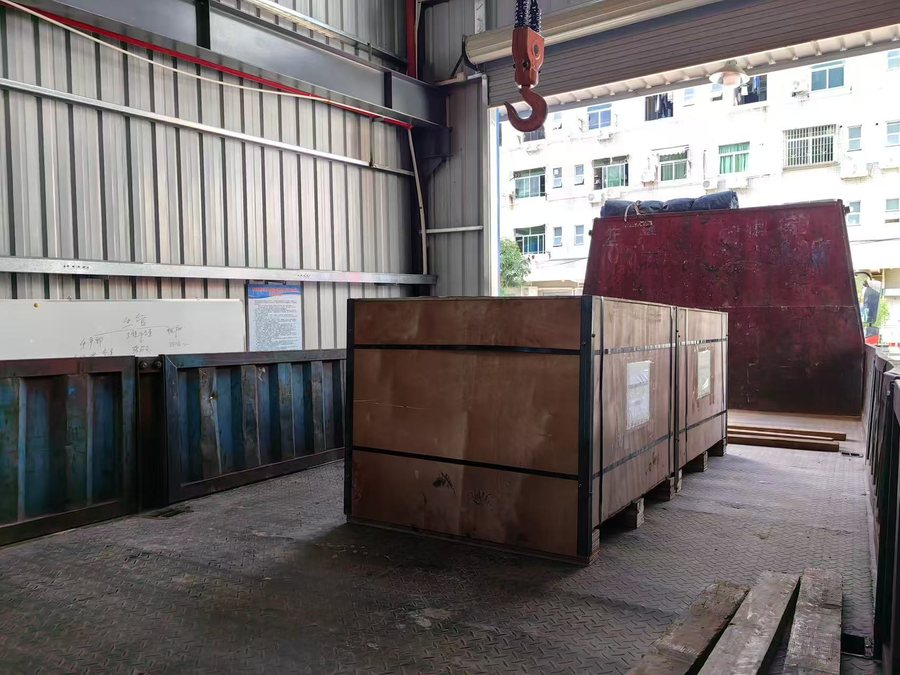
A mold base is heavy steel that has just been machined to a tight tolerance, and it is about to spend weeks in a container. Bare machined steel is at its most vulnerable the day it leaves the machine. If the crating is treated as a wrapping-up task rather than an engineering one, the first thing your incoming inspection finds is not a dimension error — it is rust.
Cleaning and marking. After the final grinding pass the plates are cleaned of chips and coolant, edges are deburred, and every plate is marked so it can only go back together one way. Plate identification matters more than most buyers expect: an A plate and a B plate look near-identical on a bench, and a cavity plate with an asymmetric pocket will fit the wrong way round. If the crate is opened by someone who did not machine it, the markings are what keep the stack in order. If you have your own marking convention, put it on the drawing — it costs nothing to follow and saves a wrong assembly at your end.
Rust protection decides whether the base is usable. Machined steel starts to oxidise as soon as it meets humid air. A sea container from Dongguan to Southeast Asia, or a month on a dock in the rainy season, is exactly the environment that turns a ground face from silver to brown. Working faces, pockets, guide bores and every ground surface get a rust-preventive film before the plates are stacked, and on longer routes the base goes into a VCI (volatile corrosion inhibitor) wrap inside the case, so the protection keeps working through the voyage instead of only at the moment of packing.
Two things are worth settling with your supplier: what the protection is, and how it comes off. A heavy grease that needs solvent washing is routine in one shop and a problem in another. Tell us what you have available at your end and the packing spec gets written around it — ask before the crates are built, because changing it afterwards means opening the case again.
The crate itself. A base that is simply laid on a pallet will move. Plates are bolted down to the skid through their own lifting or clamping holes, blocked against sideways movement, and the case is then built around the base rather than the base being dropped into a ready-made box. Steel strapping goes round the case, corner battens protect the edges, and the outside carries shipping marks, the case number, gross weight and handling pictograms.
Lifting deserves its own line. A base of a few hundred kilograms or more should be lifted on eye bolts screwed into the tapped lifting holes, or on slings passed through them — not on webbing wrapped around the plates, which can mark a finished face or shift the stack. Our own shop lifts up to 5 tonnes on the overhead crane. If your receiving bay has a lower limit, that is a real constraint and it belongs in the RFQ, not in an email after the crate has been built.
What travels inside the case. With the base: a packing list keyed to the case number, and the dimensional inspection record for the features agreed at order stage. If your incoming inspection measures the same critical features from the same datum, the numbers should line up rather than start an argument.
Customs paperwork — commercial invoice, packing list, and, where your country has a preferential arrangement with China, a certificate of origin in the correct form — has to be issued before the goods move. If you need a specific form, say so when you place the order. It cannot be produced retroactively once the container has sailed.
Sea or air. Almost all mold bases travel by sea, either as LCL alongside other cargo or as FCL in their own container, because steel is heavy and air freight is priced by weight. Air becomes realistic for small plates and genuine emergencies. If a mold has to be pulled forward, tell us before the crate is built. Re-opening, re-packing and re-documenting a base that is already banded on a pallet usually costs more than the freight it saves.
On arrival: check it before you sign. The delivery note is the moment risk changes hands, so run these six checks with the truck still there:
1. Photograph the crate before opening — banding intact, no water staining, no crushed corner. 2. Count the plates against the packing list before anything leaves the loading area. 3. Look at the working faces. A light oil film is normal; rust pitting is not. 4. Check the lifting holes, guide bores and any tapped lifting points for transit damage. 5. Measure the critical features, from the datum on the drawing. 6. Dry-assemble the guide pillars and bushes and check the fit before the base is committed to the mold.
If something is wrong, report it before you touch it. Send photographs of the crate, the feature and the measurement, inside the claim window. A question raised in week one is a conversation about a fix; the same question raised after the base has sat in a warehouse for a month — or after a suspect face has been stoned — is much harder to resolve, because stoning or grinding removes the evidence both sides need to settle it.
What makes packing simpler and cheaper. Consolidate the plates of one mold into a single crate instead of several. Tell us the destination port, the Incoterm you buy on, and the largest crate your receiving bay can physically handle. Confirm which faces you will actually inspect, so protection and packing effort go where they matter rather than everywhere. And on large plates or a non-standard format, raise the crate question early — size is what drives both the skid design and the freight.
Because the case is built by the same shop that machines the plates, the packing spec is settled while the base is still on the drawing board, and standard bases leave inside our seven-day window with crating included. At 2,000+ sets a month, packing for sea freight is routine work here rather than a specialist service bought in at the end. And with no middleman between our floor and yours, the person who answers your question about a case number is the person who packed it.
Send the drawing and the destination port together and we will quote the base and the packing in the same reply.
Related