

Buying · 6 min read
What to send with a mold base RFQ: ten details that get you a firm price
It is normal for a first enquiry to be missing one or two of the ten items below. Which ones matters, because every missing item is a question we have to ask before a price can be issued.
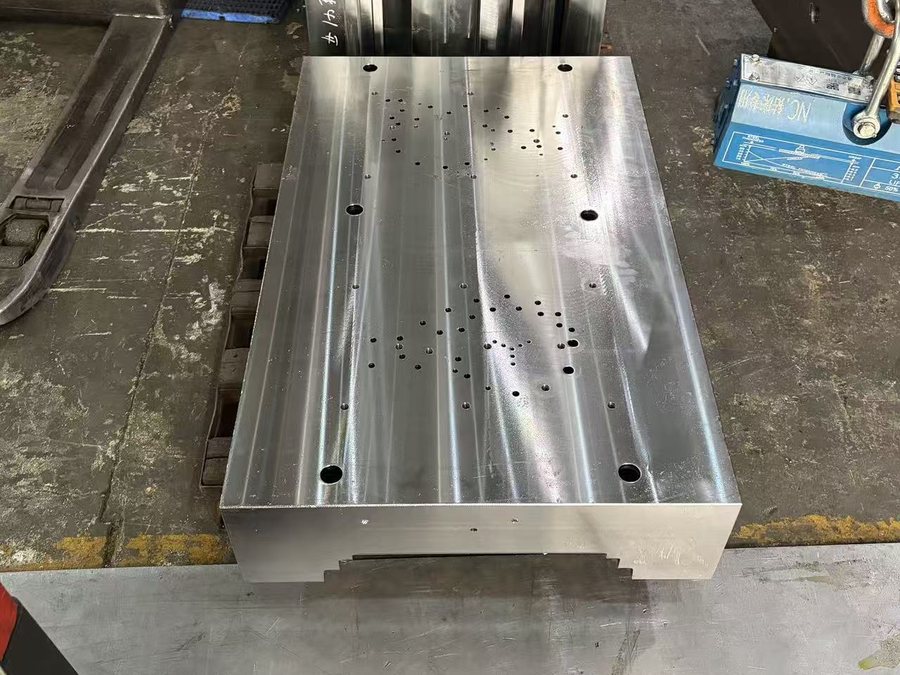
A mold base enquiry is a shopping list with a drawing attached, and the quality of that list decides how many emails come back before a price does. The ten items below are the ones we have to ask about most often, and none of them is difficult to supply.
Why it matters more than it looks. A mold base price is built from material and machining hours, and neither can be estimated from a plate size alone: two bases of identical external dimensions can differ substantially in machining hours depending on how many pockets, bores and tapped holes they carry. A supplier missing that information has two options — ask, or add a safety margin. A complete RFQ gets you the first outcome.
1. The plate list. Name every plate in the stack — A, B, C, spacer, ejector retainer, ejector plate, backing plate — with the size and thickness of each, and say which ones you are ordering from us. Plenty of buyers machine their own standard plates and only want the pocketed or non-standard ones; saying so means the quote covers what you need rather than a full set you will only duplicate.
2. Steel grade and hardness, per plate. Name the grade you want on the working plates and the hardness you expect on the working faces, and quote your house standard if you have one. If a plate is structural rather than working, say that too: S50C is the correct choice for a spacer or backing plate, not a corner cut, and putting a pre-hardened grade there adds cost without adding anything. The grade selection note covers the trade-offs if you would rather we recommend one.
3. The pocket and aperture details. A dimensioned 2D drawing with a marked datum is the clearest thing you can send. If you prefer to send a 3D model, say which faces we finish and which you will finish yourself — a model shows the finished shape, not the split of work. On a complex surface job the model is the only practical way to describe the geometry, so send it alongside the drawing rather than instead of it.
4. The guide system. Pillar and bush diameter and type, whether the bores are through or blind, and whether you want the guide components supplied and fitted by us or bored only so you can fit your own. If you are buying the pillars and bushes yourself, tell us and we will work to the component drawing rather than to the base drawing.
5. Which dimensions are fits. Mark the datum and the functional faces. On fitting and ground features — mold pockets, guide-pillar bores, shut-off faces, plate parallelism — we hold ±0.02 mm; on dimensions that are not a fit the general tolerance is 0.3 mm. Applying a fitting tolerance across an entire drawing buys nothing and costs machining hours. Anything above 600 mm is agreed case by case, and anything tighter than ±0.02 mm should be stated explicitly. The tolerance note has the short version.
6. Thread and insert callouts. Metric or UNC, thread size, thread depth against drill depth, and whether a tapped hole needs a counterbore. Thread callouts are the thing most often left off a partially dimensioned print, and also the most expensive to correct later — a plugged and re-drilled hole is never quite as good as one drilled right the first time.
7. Quantity, and whether it repeats. One set or twenty changes how the work is planned. A repeat base — the same drawing coming back every month or every quarter — is worth flagging: it changes the sensible grade choice and lets us plan around a known pattern rather than a one-off. We machine a single set as readily as a production run, and at 2,000+ sets a month a repeat order is routine rather than an exception.
8. Your marking convention. If you want plates identified a particular way — drawing number, set number, plate role, your own tag format — put it on the drawing. It costs nothing to follow and it is the difference between a stack that reassembles correctly and one that gets sorted by eye six months later. If you have no convention of your own, we tag every plate to its set; what that looks like is covered in what a wrapped base should tell you.
9. Destination, Incoterm and packing. Give us the destination port, the Incoterm you are buying on, and anything unusual about your receiving bay: the largest crate your forklift or crane can handle, whether you can take a full container, and whether you have solvent available if the protection needs washing off. All of it changes how the base is protected, crated and documented. Packing is part of the job here, quoted with the base rather than added afterwards.
10. Your date — and whether it is fixed. Seven days is our standard figure for most mold bases, counted from order confirmation to shipment, and it is worth knowing what that window includes. If you have a fixed installation date, send it with the drawing, not after the price. We will tell you what the shop can actually hold and confirm it before the order is placed — a date you can pass on. Large plates, deep pockets and grades that need hardening after roughing take longer, and those are quoted with a firm date instead of the standard figure.
What you do not need to send. You do not need a finished 3D model of the whole mold, a bill of materials for components you are sourcing yourself, or a pricing template. If the drawing cannot leave the building before an NDA is signed, say so — we will sign it, and we can quote from a marked-up PDF or a clear photograph of a print as long as the critical dimensions and the grade are legible.
How we quote, so purchasing can approve in one pass. Prices are quoted FOB China against your drawing, normally within one business day. Payment is 50% deposit and 50% before shipment, and credit terms are not offered to new customers. Minimum order is one set, because mold base plates are machined as a set and are not split. Stating this up front means your purchasing team is not chasing a second email for terms that were never going to change.
Where the time actually goes. Every item missing from a first enquiry comes back as a question. A technical question raised in week one is a normal conversation, but it does move the date, because the clock that matters starts when the drawing is settled. Most of the delay we see on late orders did not happen on the shop floor.
Send the plate list, the grades, the tolerance classes, the quantity, the destination and your date in one message, and the first reply is a price rather than a questionnaire. Steel, machining, inspection and crating all happen under one roof here, and the person answering your question about a pocket dimension is standing next to the machine that will cut it.
Related