

Buying · 6 min read
Revision B, not final_v3: how a drawing change reaches the machine
Two files with almost the same name and no marker of what changed is how a plate gets cut to a drawing nobody approved. What a revision block has to carry, which changes can be cut into the plate that already exists, and where the freeze date belongs.
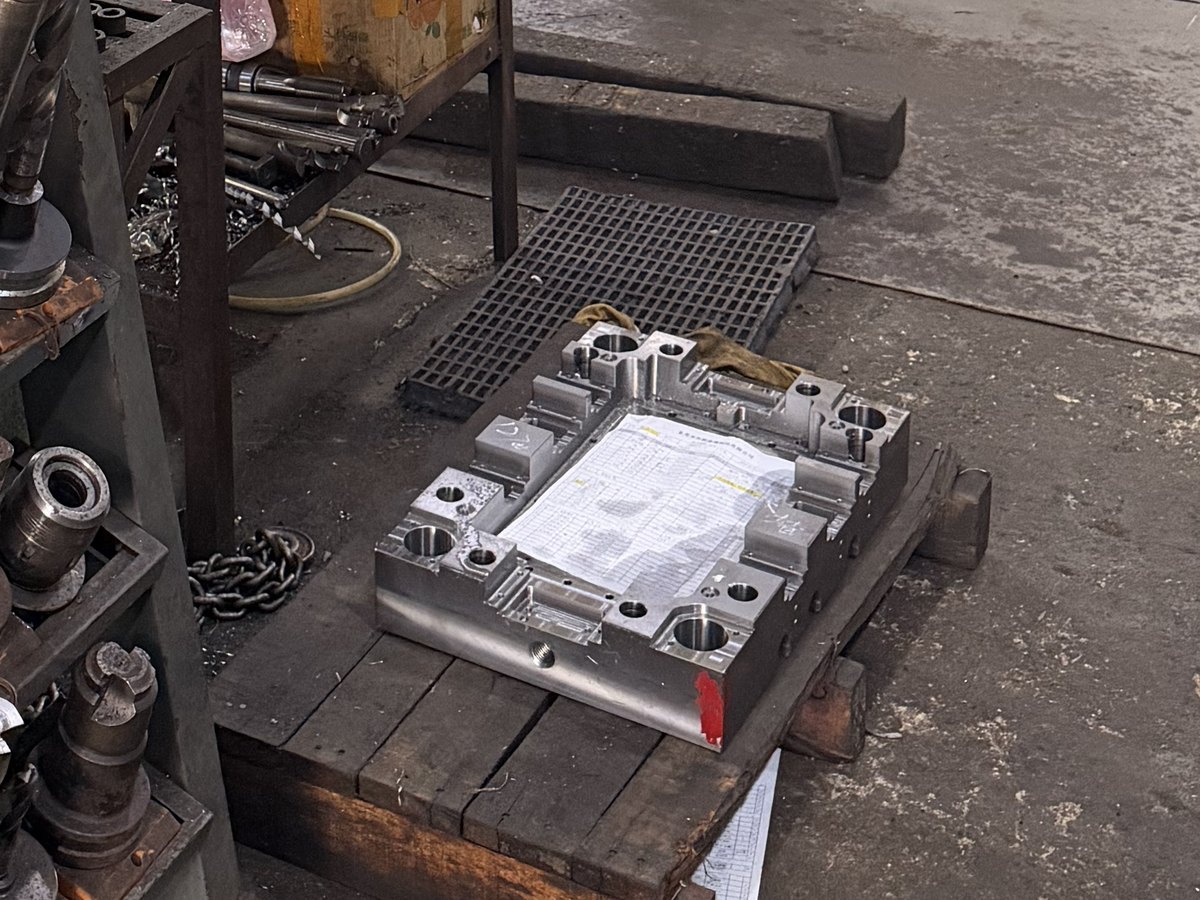
A drawing arrives as cavity_plate_final_v3.dxf. Two days later another file lands, cavity_plate_final_v3_revised.dxf, and a week after that, FINAL_final.dxf. None of the three says what changed, and all three open to a picture that looks the same. Somewhere in that sequence is the version the shop is meant to cut, and the only person who knows for certain is the one who sent them.
A filename is not revision control; the title block is. A revised sheet carries a revision letter, a date, a one-line description of what changed, and — the part most often skipped — a cloud around the geometry that moved. With those four things a shop can quote the right file, cut the right plate and tell you in one sentence what the difference costs. Without them the second file is just a different drawing that happens to look similar, and whether the change is noticed depends on how carefully someone compares two PDFs at the end of a Friday.
A note in the email does not travel to the machine. What reaches the shop floor is a printed packet or a CAM file, and the only instructions on it are the ones written into the drawing. A change described in message four of a forty-message thread is not on that packet. That is why the cheapest habit in the whole subject is to put the change on the sheet every time — including changes that look too small to bother with, because those are the ones nobody re-reads.
The changes that cost the most are the ones that look cosmetic. A tolerance tightened from 0.05 to 0.02 mm. A note in the corner that says grind after hardening, where the previous sheet said nothing. A thread written M8 on one revision and M8×1.0 on the next. An inside corner radius reduced from 3 mm to 2 mm. A plate thickness up 2 mm. A dowel hole moved by a millimetre. None of these alters the outline, and all of them change the price — most of them by adding an operation rather than by adding material.
One rule sorts most of them: metal comes off easily and goes back on almost never. A change that enlarges a pocket, deepens one, adds a hole or opens a bore can often be cut into the plate that already exists, because the machine simply goes back and removes more. A change that shrinks a pocket, moves a hole, lowers a face or reduces the stack height cannot. That single test tells a buyer, before anyone is asked, whether a change is a rework or a new plate.
When the change lands matters more than how big it is. Before the plate is cut, a revision costs a re-quote and nothing else — unless the material was ordered in a special thickness or size, in which case the material may already be committed. After cutting but before machining, the old plate is worth its scrap weight and the new one is a new plate with a new lead time. After roughing, the loss is plate plus machine hours, recoverable only if the change adds removal. After grinding, the stack height is fixed and a face that has to move is a new plate. Once the dowel holes are reamed and the stack is together, positions are locked: a pocket that moves may need new dowel positions, which is starting again.
Which is why a purchase order should carry a date as well as a revision. A drawing is frozen on a date, and after that date a change is a new job priced as one. The freeze is not a legal formality; it is what lets a machine slot be committed and a delivery date be given with a straight face. Our own orders run on four dates and the first of them is the one where the drawing stops moving; the four dates in a mold base order sets that sequence out.
The revision block wants six things: the letter, the date, who issued the change, the one line, whether this letter voids everything before it, and whether the change applies to parts already made. On the letter itself, many drawing offices skip I, O and Q, because in a small box in a title block they read as 1 and 0. It does not matter much which convention a project uses, as long as it uses the same one throughout — so that revision B on the cavity plate means the same thing as revision B on the core.
Then decide which file wins. A package usually contains a PDF and a 3D model, and the two can disagree: a pocket that moved in the model and not on the sheet, a plate that gained two millimetres in one and not in the other. Both look authoritative. Name the governing file in the purchase order — normally the PDF, because it is the one that carries the revision letter, the tolerance notes and the title block — and say plainly that the model is for reference only.
There is also the plate already cut to the old revision, and it has three futures. Finish it to the old drawing and keep it as a spare, which makes sense when the change is a new product variant rather than a correction to a mistake. Rework it, which is only possible where the change adds removal. Or scrap it for its material value. The wrong answer is to decide nothing: a plate left undecided sits in a corner, gets moved three times, and is finally identified by measuring it.
A change also needs one named approver. When a revision is agreed with three people on the customer's side, the shop ends up holding a half-cut plate while a decision gets made again, and every day of that is a day the machine is not earning. One name on the order, with authority to approve a change and to accept what it costs, removes that whole class of problem.
The checklist, then, is short. Revision letter, date and a one-line description in the title block. A cloud on every feature that moved. One file named as the contract, with the precedence between PDF and model written down. A freeze date in the order. One named approver. An instruction for material already cut. Six lines that take ten minutes and decide whether a base arrives once or three times.
None of this needs software, and it is not paperwork for its own sake. A shop that cuts its own plates reads the revision block before it reads the geometry, because the plate standing on the machine is the expensive part of being wrong. Work leaves the floor as custom and non-standard mold bases cut to your drawing, or as a precision ground mold base where the drawing asks for ground faces. The seven-day figure covers standard sizes and plain jobs, with complex work quoted a firm date before cutting starts; over 2,000 sets and pieces a month pass through our own machines; and there is no middleman between the revision you approve and the machine that cuts it.
Related