

Buying · 6 min read
From deposit to balance: the four dates in a mold base order
The payment split gets read as a price term. It is a schedule: the first half buys material and a place on the floor, the second releases the crate — and everything a buyer can still influence happens between them.
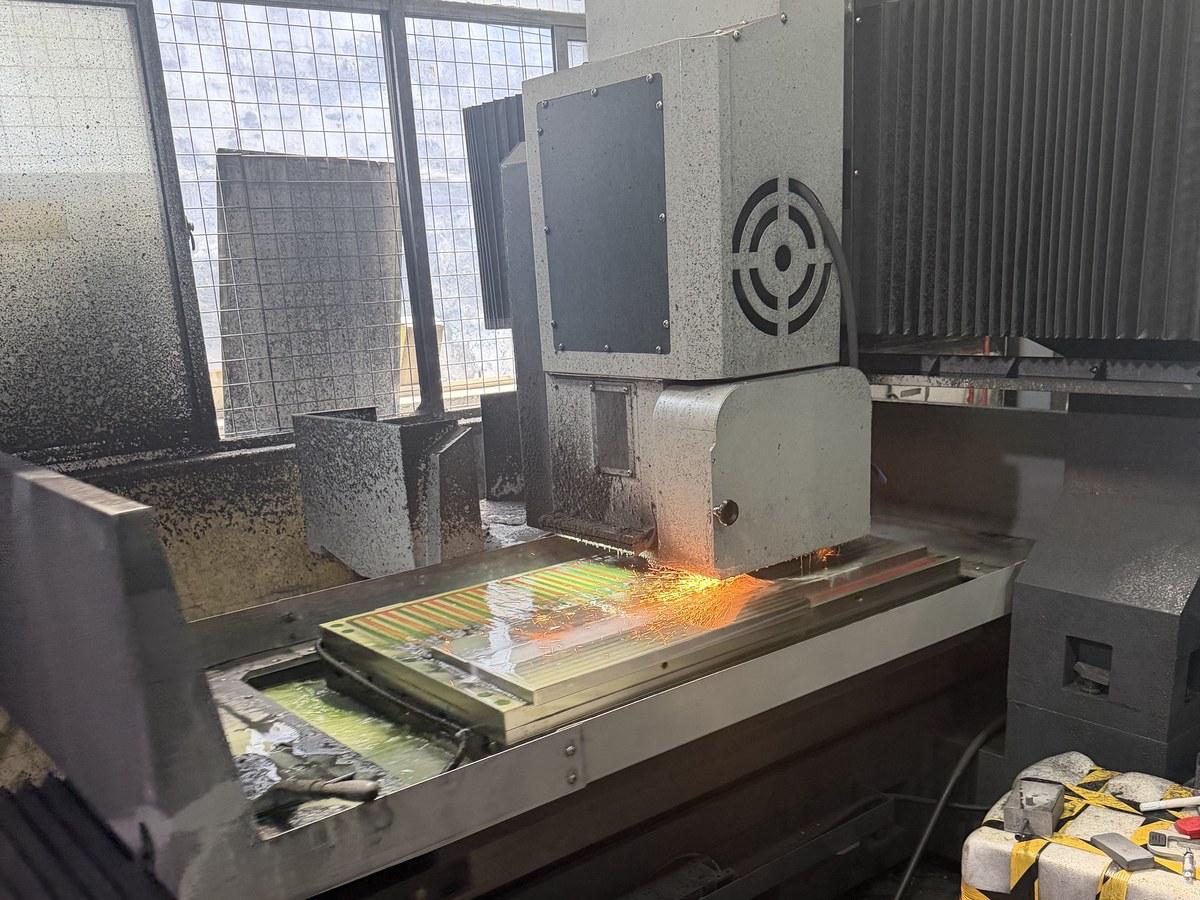
A mold base order arrives as a price, a lead time and a payment split; most buyers track the lead time. The dates that decide whether the order goes well are four, and only one of them is printed on the purchase order: the day the drawing stops moving, the day the plate is cut, the day the work is measured, and the day the crate is released. The first two are cheap to influence and gone before anyone notices them. The last two are where a buyer finds out what the first two decided.
The split is 50% deposit and 50% before shipment, with no credit terms for a new customer. That reads like financing and behaves like a schedule. The first half buys two things that cannot be undone: material committed against your plate list, and a place in the queue behind jobs already booked. The second half releases the goods. Neither half is a discount lever — moving the ratio changes who funds the steel and the machine hours, not what the job costs. What a price contains is a different question, set out in reading a mold base quotation.
Date one: the drawing stops moving. Between the order and the first cut there is a window in which a change costs an eraser, and it is the shortest window in the job. A mold base drawing carries three or four things nobody on the floor can guess: which pockets are fitting features and which are clearance, which edges the dimensions run from, whether the thread callouts are metric coarse or inch, and whether a plate thickness is a nominal to be machined or a size to be bought. A supplier who starts cutting without asking one of them is not being efficient. Answer the queries in writing and name one dated revision as the one to cut.
Date two: the plate is cut. This is what the deposit is paying for. A plate sawn to your list is not a plate the next customer can use, and that is why the point of no return sits here rather than at the shipment date. From this point a change of size is not a revision, it is a second plate and a second place in the queue. The instruction that does most of the damage is the friendly one: “start now, we will confirm the sizes tomorrow.”
Date three: the work is measured. This is the date most often sequenced wrong. The balance falls due before shipment, so the inspection has to happen before the balance — not after the crate is on the water. A buyer who has paid in full and is waiting for a container has no leverage left, only goodwill. So ask when the order is placed, not at the end: when will the plates be inspected, and what will I be holding when I pay? A workable answer names a stage, the features and a document. “We check everything” names none of the three.
The document is worth what its callouts are worth: whether the features you care about are on it, whether it is measured from the datum you dimension from, and whether it carries numbers rather than ticks. That argument is set out in what an inspection record proves. The point here is narrower. That record is the only thing standing between the second payment and a crate nobody has opened in front of you.
Date four: release. The balance should be paid against documents, not against a promise that the crate is moving. So agree early — before the vessel is booked, not after — who is the consignee, who is the notify party, and which transport document you will be handed. Whether the original bill goes by courier or the cargo is released electronically changes how many days the crate sits at the destination port, and that bill lands on the buyer. The Incoterm is a separate line again: it settles where cost and risk pass, not when money moves. Confusing the two is how buyers end up paying for goods they cannot clear.
A change is priced by which date has passed, not by how big it is. A hole added while the plate is still on the bench is minutes. The same hole after grinding means re-establishing the datum and working around finished faces. A pocket that grows after the cavity has been roughed is a re-cut, a re-grind and a fresh inspection. A plate that has to be replaced is a new plate, a new cut date and a new place in the queue — the arithmetic of stepping up a size is in the note on standard sizes. Three questions price any change: has the plate been cut, has it been ground, has it been measured?
On a first order there is no credit, and it is worth stating plainly that this is not a negotiating position. What replaces credit is a sequence a buyer can check: a complete drawing package so the queries come in the first days, not the last, a named inspection date, a record that travels with the crate, and a second order that repeats what the first one proved. A buyer asking for terms on a first order is usually buying insurance against a supplier who will not answer questions. The questions are cheaper, and they are free before the deposit.
The symptoms of a badly paced order are recognisable afterwards. A crate leaving before anyone agreed an inspection date. A balance paid against a photograph of a pallet. A revision that lands the week the plates were cut. A consignee named by whoever books the freight. A change quoted at a figure that surprises both sides because nobody asked which date had passed. None of these are arguments about quality; each is a decision taken after the window in which it was cheap closed.
What belongs in the purchase order is short: the cut-release date and the revision it refers to, the inspection date and what you will receive, the trigger for the balance, the ship window, the document set, the consignee and notify party, and any packing instruction the crate has to satisfy. Everything else — plate list, steel, tolerances, pockets — belongs in the package that goes with it, which is the list in what to send with a mold base RFQ. The distance between a firm date and an optimistic one is a single unanswered question at the start.
None of this is exotic. It is the ordinary machinery of buying steel, and the buyers who get it right rarely argue over the split — they keep four dates instead of one. Work like this leaves the floor as custom and non-standard mold bases, and where a catalogue size already fits, as a standard mold base. The seven-day figure covers standard sizes and plain jobs, with complex work quoted a firm date before cutting starts; over 2,000 sets and pieces a month go through our own machines, so a schedule that shifts has somewhere to go; and there is no middleman between the drawing you approve and the machine that cuts it.
Related