

Buying & sourcing · 6 min read
The catalogue size or your size: what a standard mold base really costs
A standard size is cheaper to make, and it stays cheaper only while what comes out of it is still the thing you asked for. Where a step up in size actually shows up in the price, what trimming a standard plate quietly removes, and the four checks that settle the question before the order.
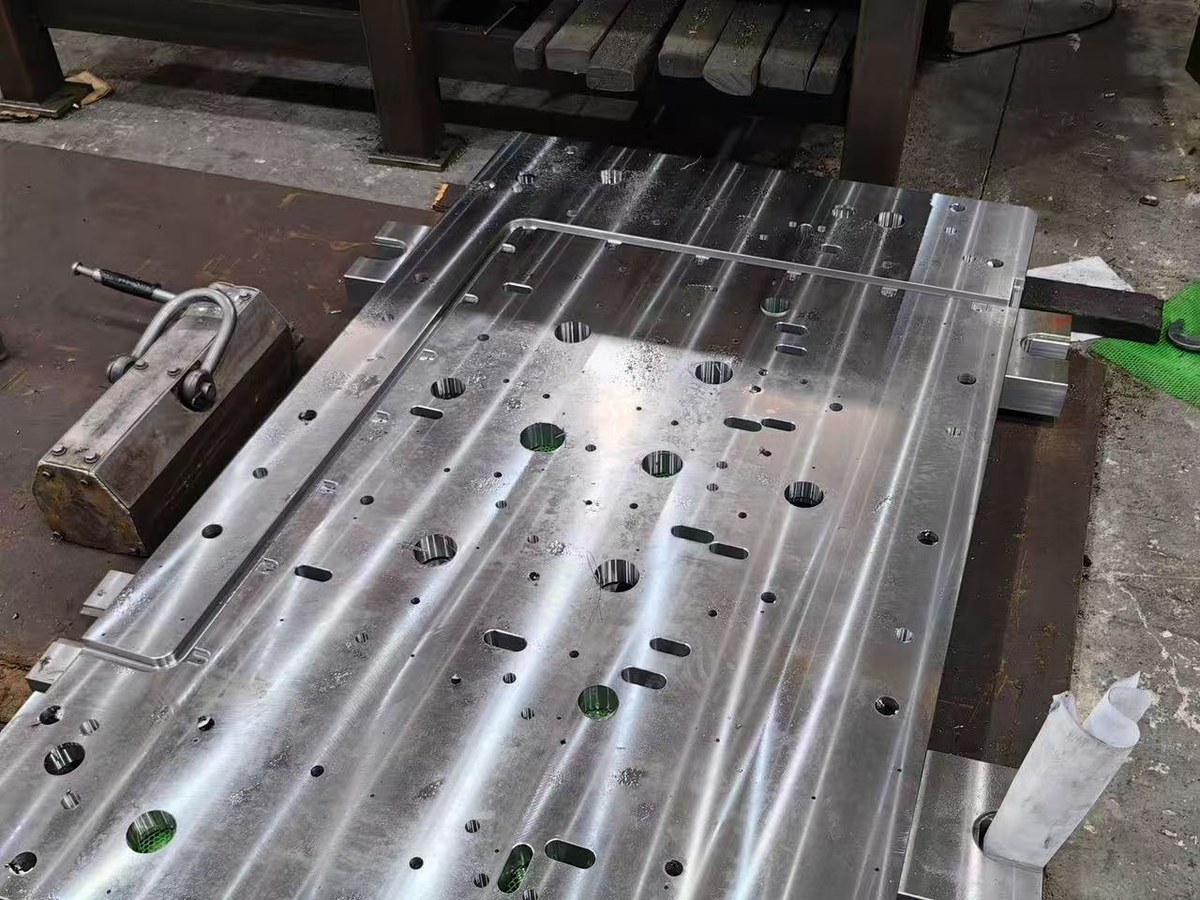
A standard mold base is a good buy. Its plates come from stock already squared and faced, and because the same size is made again and again, the setting-up cost is shared between everyone who buys it. The question is narrower than “standard or custom”: does the saving survive your part? A standard size stays cheaper only while what comes out of it is what you asked for. The moment it has to be trimmed, added to, or worked around, you have paid for a plate and will pay again to undo it.
Standard sizes come in steps, and the step is not set by your part. It is set by what is convenient to cut, stock and ship, which is why the gap between steps is often wider than the amount you are short. The real choice is rarely “a little bigger” but one whole step bigger, in one direction or both. Work out how much of the next size up you would use; that figure, not the catalogue price, is what the step costs. How our lines differ is covered in choosing between the lines; what follows is only about size.
Area grows faster than the edge. A plate a tenth larger in both directions carries roughly a fifth more surface, and surface is what most of the job is priced on: facing, grinding, pocket floors, the land between pockets, the clamping and coolant a longer cut needs. The extra steel is usually the smallest line in the difference — so when two quotes come back far apart, look at surface, not weight.
Weight drags other decisions behind it. A heavier plate asks for different lifting tackle in our shop, more blocking under it, and a machine whose table and travel can take it. At your end it reaches the press — tie-bar spacing, clamping slots, the knock-out pattern on the platen — and the case, which gets longer and taller and can move onto different freight. All of that is triggered by the step in size, not by your part. Large plates meet the same logic, as the note on large-plate work describes.
If a standard size is nearly right, the obvious move is to buy it and trim it. It is worth knowing what trimming removes. A standard plate is machined with its edges as references: features are positioned from them, and the faces that will shut off are finished with the plate whole. Take an edge off and you have a new unsquared reference, and every figure measured from the old one means something different. Settle which operations run before the plate is cut down and which after, and write the position figures so they survive that — the point the note on tolerance callouts makes.
A plate cut to your own dimensions buys something else: positions. The pockets sit where the cores sit; the land between them is the width your wall thickness and cooling need; the guide pillars stand where your layout leaves room. The ejector pattern, knock-out holes and clamping slots come from the press, and the overall size follows the plates stacked above and below. A catalogue size fixes the outside and works inward; a base cut to your drawing works outward from the part. When the part cannot move, that is the direction to run the arithmetic in.
Every base carries spare material: clearance for clamping, room for water lines, a margin at the edges. On a standard step that spare arrives as an even band all round. On a base made to your drawing it goes where needed, which on most parts is not everywhere — a wide land on one side for a slide or an ejector rail usually comes with a thin edge on the other. An even band bought to get one wide side pays for three sides you never use, which is why plate size and pocket layout are one decision, as cavity pocket layouts set out.
None of this makes a special size the default. If the part fits a standard size with usable clearance for pockets, cooling and guide pillars; if the tool is a trial or a low-volume job; if you are ordering a spare, or a carrier plate that has only to carry — standard is faster and cheaper. Four checks settle it. Does the part sit in the standard size with real room around it? Do the guide pillar bores land where you need them? Is the plate inside the clamping range of the press? Will any position figure move if the outside is trimmed? Four yeses, buy the standard size.
The practical part is two numbers that can be compared. Ask for a standard size and a size cut to your plate list, on the same drawing — then compare operations rather than totals. What is faced and ground in each? Are the guide bores cut before or after the outside is trimmed? What does each weigh, and how does it crate? Two prices only mean something when the work behind them is listed, as reading a quotation sets out. The question that gets the useful answer is short: if I took the next standard size up for this plate list, what would change?
The cost of the wrong size arrives late, and never presents itself as a sizing mistake. A pocket wall thinner than the drawing asked for because the plate ran out. Guide pillar bores moved after the outside was trimmed. A base that will not sit in the press because the plate grew past the clamping range. A case that costs real money because the plate went up a step and the crate with it. All read as somebody's error at the end, and all were decided when the size was chosen.
It is settled by sending the plate list with the outside dimensions and saying which are fixed. The plates that stack on your base set the overall size; the press sets the clamping and knock-out positions; the cavity layout sets where the pockets and cooling have to go. Send those three and a base can be sized right the first time, whether the answer lands on a standard step or beside one. The rest is the list that gets a firm price, set out in what to send with a mold base RFQ — plus one line, when you are close to a standard size, saying so.
We machine both. Standard sizes and bases cut to your own plate list go through the same plant, with the same ground faces on the ones that need them; the size you are quoted is the size that comes off the machine. A standard base is the seven-day job. Over 2,000 sets and pieces a month run through our own floor, so a size cut to your drawing does not wait for a convenient batch, and there is no middleman between your plate list and the person who cuts it. Send the drawing and the plate list, and say which dimensions are fixed; we will tell you which size is cheaper. On custom and non-standard bases it usually starts from the standard size you were going to buy anyway.
Related