

Buying guide · 6 min read
How many cavities in one mold base? What the pocket layout decides
Cavity count is settled by the part and the press. The pocket layout is where that decision turns into a plate size, a steel cost and a lead time — and it is the part of the drawing a mold base shop is actually quoting.
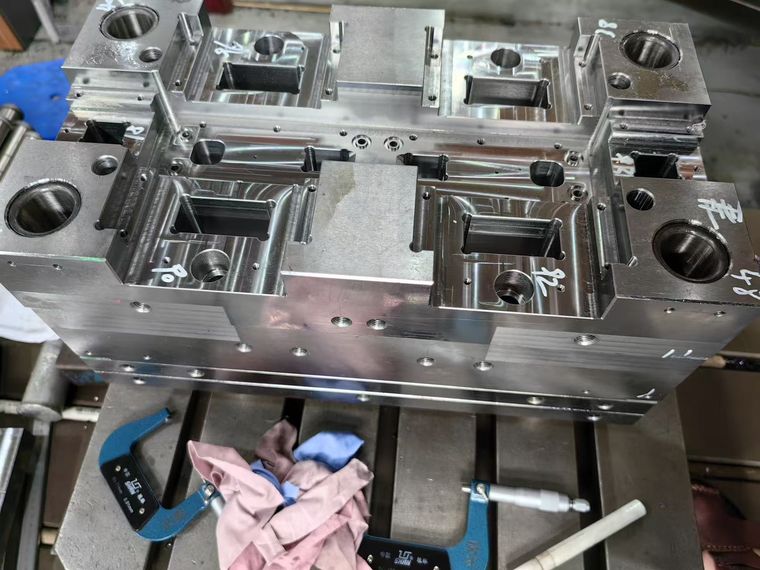
The pocket layout is what a mold base is bought for. A mold base looks like a stack of plates, but what your cavity work depends on is the set of pockets cut into it and the bores around them. Cavity count, cavity positions, pocket depth, the land between pockets and the guide system all arrive on the same drawing, and together they set the plate size, the steel, the machining hours and the lead time. Settled in the enquiry, they become a price. Left loose, every shop has to answer with a range.
More cavities means a bigger plate, and the plate grows faster than the count. A second cavity is not one more pocket; it is one more pocket plus the land that carries the load between them, plus clamping and handling margin, plus a guide and ejector pattern that clears all of it. Steel and machining scale with the plate rather than with the number of pockets, so the comparison worth making is cost per part, not cost per base. Whether the job is a standard mold base in a pattern that already exists or a custom base built around your layout, tell us the cavity count you are designing for and we will say what it does to the plate and the price before you commit.
Position is where the work is. Cutting a pocket to size is a straightforward operation. Making four pockets agree with each other, and with the guide bores, is the part that decides how the tool runs. We hold pocket positions and guide bores to ±0.02 mm as fitting features, located from the datum on your drawing — so give us that datum, and make it the same one your insert will be set to. Pockets located from different datums, or from a plate that was turned and re-clamped between pockets, agree with each other only by luck.
Pocket depth is a relationship, not a dimension. Every pocket in a stack has to finish at the same height relative to the closing face. A pocket a few hundredths deeper than its neighbour changes the amount of steel the cavity sits in at that station, and the result is a wall thickness that varies from cavity to cavity on one part number. Depth is therefore called out against a face — the same face the ground surfaces are made to — and the stack is checked as a stack once the pockets are in it, inspected before dispatch with the records travelling with the shipment.
The land between pockets carries load and routes water. Closing force presses down on the land between cavities, and the distance between cavity centres is what decides how much room the cooling circuit has to reach each one. Push the cavities together and the plate gets lighter, but the webs thin out and the water has less space to move in; pull them apart and the plate gets heavier while the circuit gets easier. That trade belongs to your design, but it also decides whether the base can be clamped and cooled the way you intended.
Not every pocket is a rectangle. Sub-inserts, stepped shut-offs, angled faces, slider pockets and engraved detail all have to be quoted from geometry rather than from a cavity count. A single sculpted pocket for a complex surface mold base can take more machining than four plain rectangular pockets in the same plate. That is why we quote against the drawing and not against a headline number: send the geometry and the price stays the price, instead of being revised once the pockets are understood.
The layout has to live with the guide system and the ejector pattern. Guide pillar bores, guide bushing bores, return pins, ejector plate and cooling ports all compete for the same plate faces. A pocket set close to a guide bore thins the land around both, and a pocket that runs into the ejector pattern has to be moved or the pattern re-designed. This is why we ask for the full plate drawing rather than a cavity layout on its own, and why an injection mold base is normally bought as the complete A/B assembly: the pockets, the guide bores and the ejector pattern are made in one setup, in relationship with each other.
Where a pocket layout goes wrong, and how you see it. One station in a four-cavity tool producing a heavier or fuller part than the others. Flash that appears on one side of the tool and not the other. A pocket that has to be re-cut because the plate was turned and re-clamped between pockets. A sub-insert that will not seat because its pocket and its neighbour were measured from different faces. None of those is a machine fault — they are layout and datum faults, and they get expensive once the plate is finished.
What changes the price and the lead time. Plate size and thickness, cavity count and pocket geometry, how many faces are held as fits, how many setups the layout needs, whether pockets are integral or bored for inserts, and whether the drawing asks for ground shut-off faces. What does not change it is the label: most custom bases we machine leave inside the same window as a catalogue size, because the week is planned as one job either way. Which line a job belongs to is set out separately in the product-line guide.
What to send with the enquiry. The plate list with cavity count and positions; the datum the pockets are located from; which faces are fitting faces; the pocket depth callout and whether the pockets take inserts; the guide system you want; the ejector pattern; your annual volume; and the destination, because packing follows the route. The RFQ checklist covers the full list, and the tolerance note covers how to call the figures out.
Where the layout sits in our week. Standard and custom bases leave inside our seven-day window whatever the pocket layout; at 2,000+ sets a month the week is planned as one job; and everything is machined on our own machines, so the price you approve is a factory-direct price. Minimum order is one set, and quotes normally go back within one business day on 50% deposit and 50% before shipment. Send the drawing, tell us the cavity count and the datum, and the layout can be quoted as it stands.
Related