

Buying · 6 min read
Same drawing, two quotes: where the difference actually sits
Two prices for one drawing are rarely about who is cheaper. They are a record of what each supplier has decided the job includes — and the omissions are usually where the gap is.
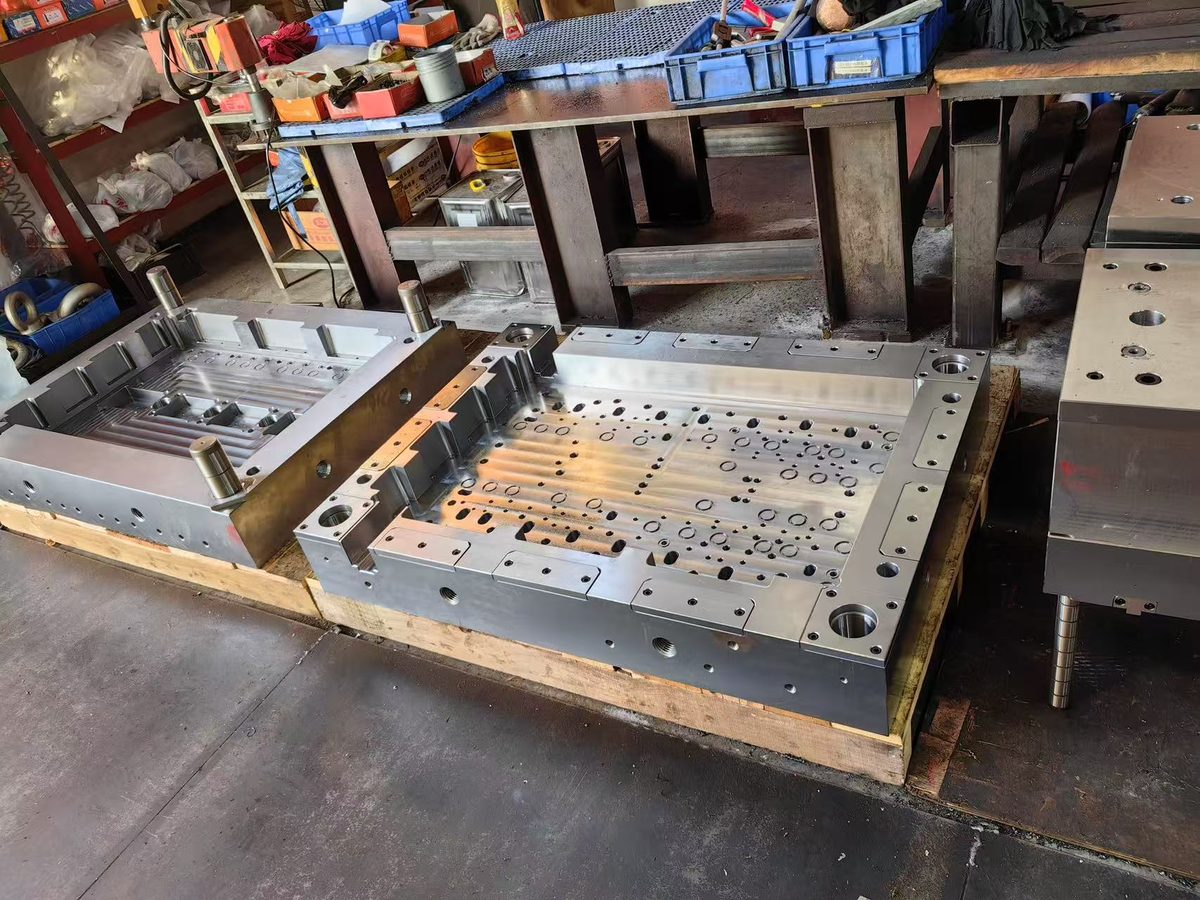
Two quotes for the same drawing arrive, and one is clearly lower. The instinct is to find out what is wrong with the higher one. The useful question is a different one: what has each supplier decided this job contains? Both documents can be arithmetically correct and still describe two different jobs, because a quotation is not a price. It is a list of intentions, and the list is where the two stop matching.
Start with the steel, and read the actual words. Two quotes can both say P20 and mean different things by it. What matters is the grade, the stock it was cut from, and the condition it arrives in: pre-hardened to a stated band, or to be hardened after roughing. Change the condition and you change the machining, the risk, and everything that happens after the base leaves your supplier. Our steel grade note covers the grades we cut; the hardness note explains why “pre-hardened” describes a delivery state rather than a finished working face.
Compare the thickness table line by line, not the total. Plate thicknesses are not decoration. They set the stack height, and the stack height fixes the return pin length, the ejector travel and whether the finished assembly fits the press it was bought for. A quotation that takes a few millimetres out of a support plate is offering a real price difference with a real consequence. If one document lists every plate and the other writes “as per drawing”, the two are not comparable yet — and on a non-standard base those thicknesses are the job.
Ask which tolerance class each quote is promising, in figures. We quote the faces that mate and the faces we grind at ±0.02 mm, the guide pin and bush bores positioned to ±0.02 mm, ground faces at Ra 0.8 µm, and every dimension that is not a fitting feature inside a general 0.3 mm band. Numbers like those cost what they cost. A document that answers with “high precision” or “as per drawing” has not answered, and this is usually the row where two prices separate. The tolerance note lists the feature groups that need their own callout.
The surface row decides the part you will actually run. A milled plate and a ground plate are two different products. Grinding is what keeps the parting line and the shut-off faces closing, and what holds cavity depth consistent across a plate, so a cheaper quote that has quietly dropped grinding is not cheaper — it is a different item, which is why we treat ground faces as a line of their own. Why ground faces matter goes through the defect it prevents.
Then hunt the omissions, because that is where most of the gap lives. Both documents may stop at “plates with pockets machined”. Below that line sit the operations a buyer assumes are standard: ejector pin holes and their head recesses, return pins, the ejector guide set, the knock-out bore in the bottom plate, a drilled and plugged water circuit with its port threads, chamfering on the bores that take inserts, marking, and an inspection record that travels with the shipment. Tick each of those rows on both documents. A blank row is not a saving; it is a question. The notes on ejection, cooling circuits and hole-making all describe work that is easy to leave out of a scope.
Read the lead time as a line item too. Seven days covers a scope we have published: roughing, the operations that need a second setup, grinding, and inspection before dispatch. A shorter date is not dishonest — it is a smaller scope. Ask which of those steps has been removed and you will usually find the answer on the omission list you have just built. What the 7-day lead time covers sets it out.
Find out where the quote stops. Packing is a line on a quotation, not a courtesy. Film wrap, the crate, the markings, and who loads it: a price that ends at the factory gate has not included the crate that arrives on your dock, and export packing is where a “cheaper” quote regularly turns out not to be. Packing and shipping a mold base covers what leaves our floor.
Finally, the commercial frame. We ask for 50% with the order and 50% before shipment, and we do not offer credit terms to new customers. If a quote is much softer than that, it is worth asking what is funding the difference, because someone is carrying it — in the price, in the tolerances, or in the date. Payment terms belong in the same comparison as everything else.
Lay the two documents side by side and go down the same rows in the same order. Steel grade and delivery condition. Plate thickness table. Tolerance class per feature group. Milled or ground. The included-operations list. Packing. Lead time. Payment. Where a row is empty on one side, ask one question about that row — not five questions about the total. And when the two quotes come from businesses of different shapes, the questions about who actually machines the job will tell you how much of what you are comparing is subcontracted.
One question resolves most comparisons, and it is a narrow one: for this drawing, list what you are not doing. A workshop that runs the job itself can answer that on a page, because it knows which operations it quoted and which it did not. A price that arrives without a scope is the start of a conversation, not the basis of a decision.
That is why we put the steel, the thicknesses and the tolerance classes we work to into the quotation itself, for a standard plastic mold base as much as for a one-off plate. It is also why a base can leave our floor in seven days: with over 2,000 sets and pieces a month going through our own plant, the plates cut, bored, ground and inspected under one roof, there is no handover for a scope to get lost in — and no middleman between your tolerance class and the spindle.
Send the drawing, and ask for the scope list with it. If you already have two quotes in front of you, send both: we will go down the rows and tell you what is missing, including the rows that are missing from ours.
Related