

Buying · 6 min read
One drawing, six bases: what repeats and what never does
A buyer ordering six identical bases assumes the price is one price times six and the date is one date. Neither is exact, and the parts that repeat and the parts that never do are predictable enough to plan the order around.
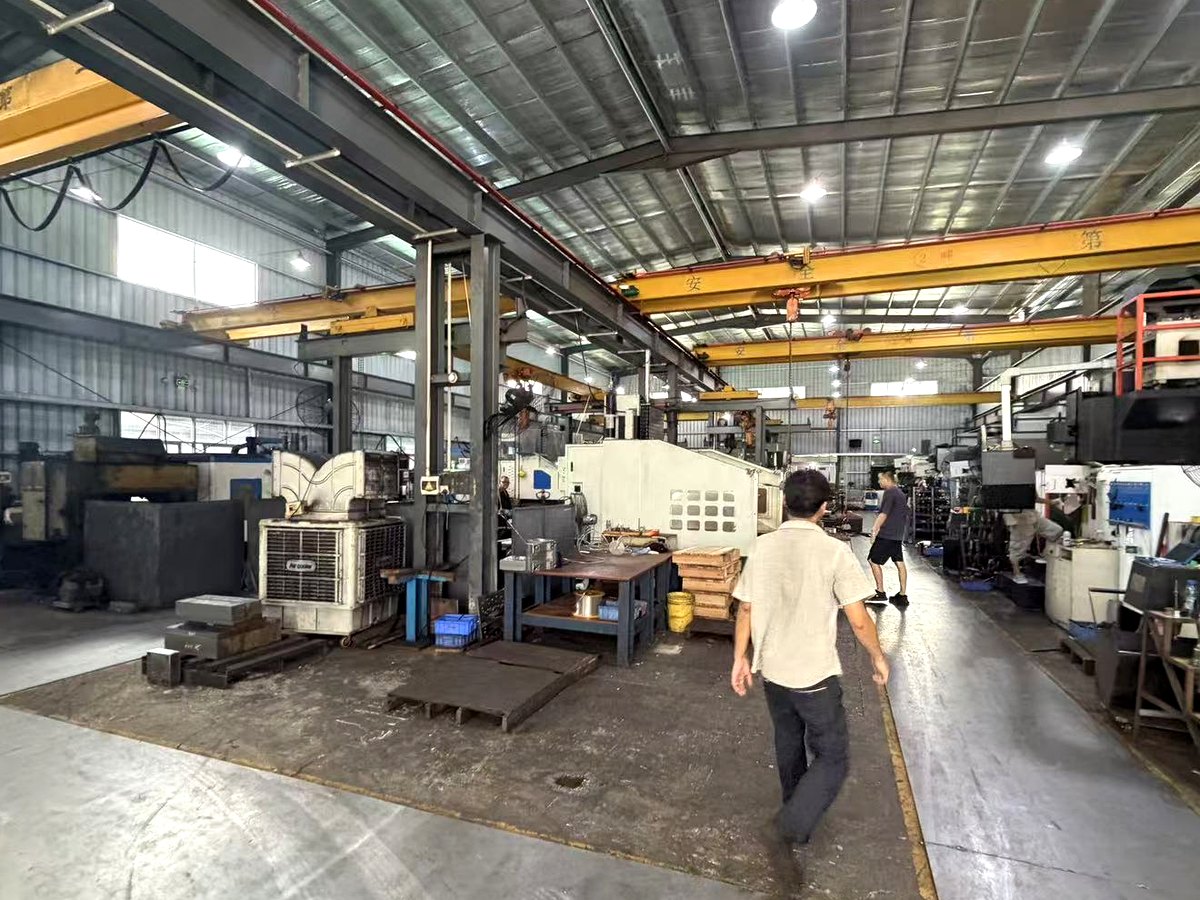
The first base of a new drawing is where a drawing stops being a document and becomes a set of decisions. A hole that breaks into a pocket. A face that has to be a datum and is also a shut-off. A fit the customer calls loose that the assembly needs tight. Each of those is settled once, in the shop, with the drawing in hand — and the next five bases inherit the answer. That inheritance, not the steel, is the only real economy of scale in this work.
What repeats is knowledge. Six plates with the same hole pattern are one program run six times. The fixture is built once and its height set once. The first article is measured against the drawing, and the rest are compared against the first article rather than against a fresh reading of the print. Plates of the same thickness go on the grinder in one batch with one wheel dress and come off sharing a parallel. The operator also remembers where that particular plate moved after roughing, and that memory is worth more than any setup sheet.
What never repeats is the cut. A machining centre holds one plate at a time. Six plates means six roughing passes, six finishing passes, six sets of bores, six lifts with the crane and six trips to the bench. Repetition makes a person quicker at the setup and does nothing whatever for the spindle. Everything the plate consumes — steel, hours, grinding, handling, cutter life — is consumed six times over.
That is why a quantity price has two parts and not one. Programming, fixturing, the first-article check and the packing design are paid once; the rest multiplies. When you compare a single-set and a six-set quotation, the useful exercise is to split it that way: the part that did not multiply is the shop’s fixed cost, the part that multiplied cleanly is material and time. A quotation that scales the whole line by six without a break is describing one cost, not two — and it is fair to ask which.
Thickness is the lever you actually hold. The cheapest change a buyer can make on a six-set order is the number of plate thicknesses in it. Six plates of one thickness can be cut from one stock length, ground in one batch and checked with one setup. Six different thicknesses mean six stocks, six grinding setups and six chances for one plate to land at the edge of its band and need a second pass. Where the design allows two thicknesses instead of four, the order gets shorter before anyone touches a machine. It is the same arithmetic that makes a catalogue size cheaper than a trimmed one, and it is decided at the drawing stage, not at the machine.
The plates run as a sequence, and the sequence has a point of no return. Identical plates are machined in order: the first is cut, measured, and only then do the rest follow. That order exists so a mistake costs one plate instead of six. It also means the batch is one decision — a change requested after the first plate is finished reaches five more, which is why a revision on a batch is priced by how far the batch has run rather than by how small the change looks.
Two now and four later is a different order from six at once. Partial delivery is legitimate and often right: the first press needs a base before the others are built. But the second batch is not the first batch continued. It re-enters the schedule, the drawing is re-issued and checked against what was actually made, and it occupies a second machine slot. The 7–10 days on a quotation covers one run; four bases made six weeks later carry their own date. Buyers who expect to split should ask for both dates while the quotation is open, because the second one is set by when you ask, not by the first.
Quantity added after the saw is a new job. The expensive misunderstanding in repeat orders is the seventh base ordered once the plates for six have been cut. At that point it is not a continuation: stock is bought again, the plate is squared again, the fixture is set again and the first-article check runs again. If the number is uncertain, settle it before the saw — an extra set priced inside the same run costs what a set costs, while the same set priced as a separate job costs what a job costs.
Identical has to mean identical, and that is a drawing decision. Six bases going into six different presses only need matching interfaces. Six bases that must interchange as spares need one datum, one hole pattern and one shut-off height, and they need to be marked so a set can still be identified after the case is closed. Marking is free on the drawing and expensive after packing, and interchangeability is not something inspection can add later — it is either the way the plates were set up or it is not. The list of what must match is short, and it belongs in the first email, not the last.
Freight changes shape with quantity, not just weight. One set leaves as a case. Six leave as a pallet or a shared crate, which is cheaper per set and heavier per package — possibly heavier than the forklift waiting at the other end. A consolidated shipment assumes a site that can lift it; one case per set assumes someone can open six cases. Say which your site can do, and if the plates are oversize, say it early enough for the skid to be designed with the part rather than around it.
Six lines worth putting in the RFQ. The quantity, and whether the sets must interchange or merely match. Whether thicknesses may be consolidated. Whether delivery is one shipment or split, with both dates asked for. How the sets are to be marked. Whether packing is per set or consolidated, and what will unload it. And the date the drawing freezes, because on a batch that date is the only thing stopping the sequence from being restarted.
One set is our minimum order, and it is a real minimum: plates are not split to fill a book. But most of the work that leaves the floor is repeat work, and it behaves the way this page describes — a fixed part paid once and a per-plate part paid every time. Whether the six are custom bases machined to your drawing or standard sizes taken from a catalogue, most mold bases ship in 7–10 days from order confirmation, on a floor that turns out more than 2,000 sets and pieces a month, with no middleman between your drawing and the person who clamps the plate. Send the quantity with the drawing and the reply will separate the two parts for you.
Related