

Technical · 6 min read
Guide pillars and bushes: the bores in your mold base decide how it runs
The guide system is not an accessory bolted on at the end. Underneath it there is a set of bores, and how those bores are positioned is what decides whether the two halves of your tool stay where you put them.
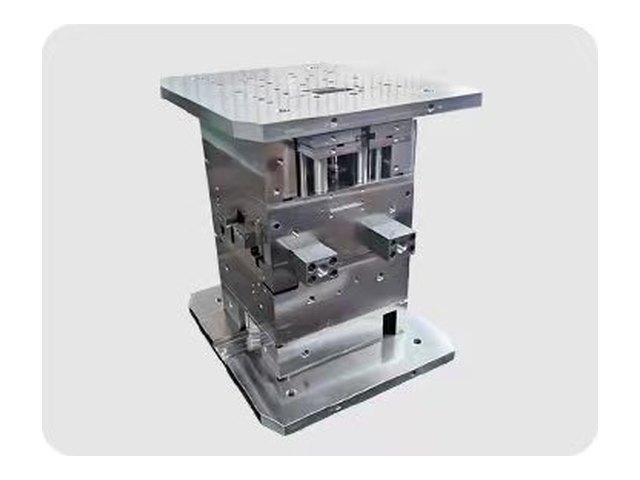
A guide system is a set of bores before it is anything else. A mold base holds the cavity half and the core half in the same relationship on every cycle, and the guide pillars are what enforce it. But a pillar is only as good as the bore it runs in and the bore it stands in: underneath the guide system there is a set of holes bored into the plates, positioned relative to each other and to the cavity. That is the part of the guide system a mold base shop actually controls, and it decides whether your cavity work runs true for the life of the tool — or fights itself.
What a loose guide system costs you. Let the plates move relative to one another and the bill arrives in three places. The shut-off faces stop closing consistently, so flash appears on one side of the part and not the other. The cavity and core lose register, so wall thickness varies around a part that should be uniform — which is why thin-wall and cosmetic work is so sensitive to it. And the pillars take a side load they were never sized for: the pillar scores, the bush wears oval, and the next cycle is worse than the last.
Plain pillars with plain bushes are the default, and most of the time the right answer. A solid pillar runs in a plain bush, greased or oiled, and the fit between the two does the work. There is no cage to seize, and a plain system forgives a dustier shop and a looser maintenance schedule than anything with balls in it. Unless your process argues for something else, this is what the drawing should call out.
Ball-guided sets put a caged ring of balls between pillar and bush, so the pillar rolls rather than slides. Friction and stick-slip both drop, and the plates come off their stops with less of a jump — which is what tight-tolerance work and long runs pay for. Two consequences: the pillar has to be hardened and ground for the balls to run on, and the bore has to carry the clearance for the cage rather than for the pillar alone. Wear moves into the cage, a component you can replace without touching the plates.
Self-lubricating and oil-free bushes suit tools that will not be serviced often, or where grease near the cavity is a contamination risk — food-contact packaging, or a plant where nobody is going to pull the tool for a lubrication schedule. The trade is in load capacity and running clearance rather than position, but it is a real trade: put it in the enquiry, not in a substitution after the fact.
Position is the figure that matters most. Making a hole to size is straightforward; making two holes agree with each other and with the pocket is the work. We hold the position of the guide pillar bores and the guide bushing bores to ±0.02 mm, the same figure as the fitting and ground faces, so the pillar axes and the bush axes describe the same geometry as the cavity. Tell us the datum you want the bores located from — the same datum your insert will be set to.
Fit, depth and lead. A guide bush is normally pressed into its plate and the pillar runs in the bush, so the bore has two jobs at once: hold the bush hard enough that it cannot turn or creep under load, and stay true so the running clearance is even all the way down. Bore depth has to carry the full bush plus entry for the pillar's lead, and the pillar's exposed length sets how much guidance the plates have before they touch. Both are drawing decisions, and cheaper there than on the shop floor.
Which half carries what, and whether the hole is a bore at all. Convention puts pillars in one half and bushes in the other, and what decides which is your machine and your handling rather than ours — so say it instead of leaving it to habit. A guide hole that was drilled is a drilled hole, not a guide bore: it has to be bored, and reamed or honed where the drawing asks, to hold a true axis. Comparing two shops on price? Ask what the guide holes are made with; the difference usually lives there.
The strongest reason to have the base and its guide holes made in one place. Pillar bores and bush bores have to line up between the two halves and stay parallel to each other through the stack. Two plates bored in separate setups from separate datums, each perfect in itself, have no reason to agree with each other — and when they do not, the pillar is what bends to make up the difference. We bore guide holes as part of the stack, located from the datum on the drawing, so the axes agree with each other and with the pocket. Mix a plate machined elsewhere into a stack machined here and that alignment becomes nobody's job in particular.
How a guide system fails, and what each failure points at. Scoring, or a bright brassy smear on the pillar, is a bush running dry or a clearance too tight for the heat the tool reaches. A bush that has turned in its bore means the press fit was never enough — often because the bore opened when a thin wall around it was machined or the plate got hot. A pillar bending just above its root is unsupported length, not bad steel. None of those traces back to the pillar, and repair follows the same logic: if the bore is still round and true, a new bush restores the fit with the plates untouched; if it has gone oval, the plate has to be bored oversize and sleeved back.
What to put in the enquiry. Say which guide system your design calls for — plain, ball-guided or self-lubricating; the guide hole callouts from your drawing, or the catalogue pattern if the base is a standard mold base; the pillar diameter and exposed length; and whether the guide components come with the base or you are supplying them. The tolerance note covers how to call the figures out, and the product-line guide covers which family the job belongs to — an injection mold base, a frame, or a die set, where the guide system is the whole story.
Where this sits in our week. Standard and custom bases leave inside our seven-day window; at 2,000+ sets a month the week is planned as one job; and everything is machined on our own machines, so the price you approve is a factory-direct price. Minimum order is one set, and quotes normally go back within one business day on 50% deposit and 50% before shipment. Send the drawing and say what the guide system has to do.
Related