

Buying · 6 min read
One mold base, three parties: who actually owns the drawing
The brand buys the tool, the toolmaker cuts the cavity, and the frame is machined somewhere else again. Three parties is fine. Three parties with nobody named as the owner of the plate list is how a base gets cut to the wrong revision.
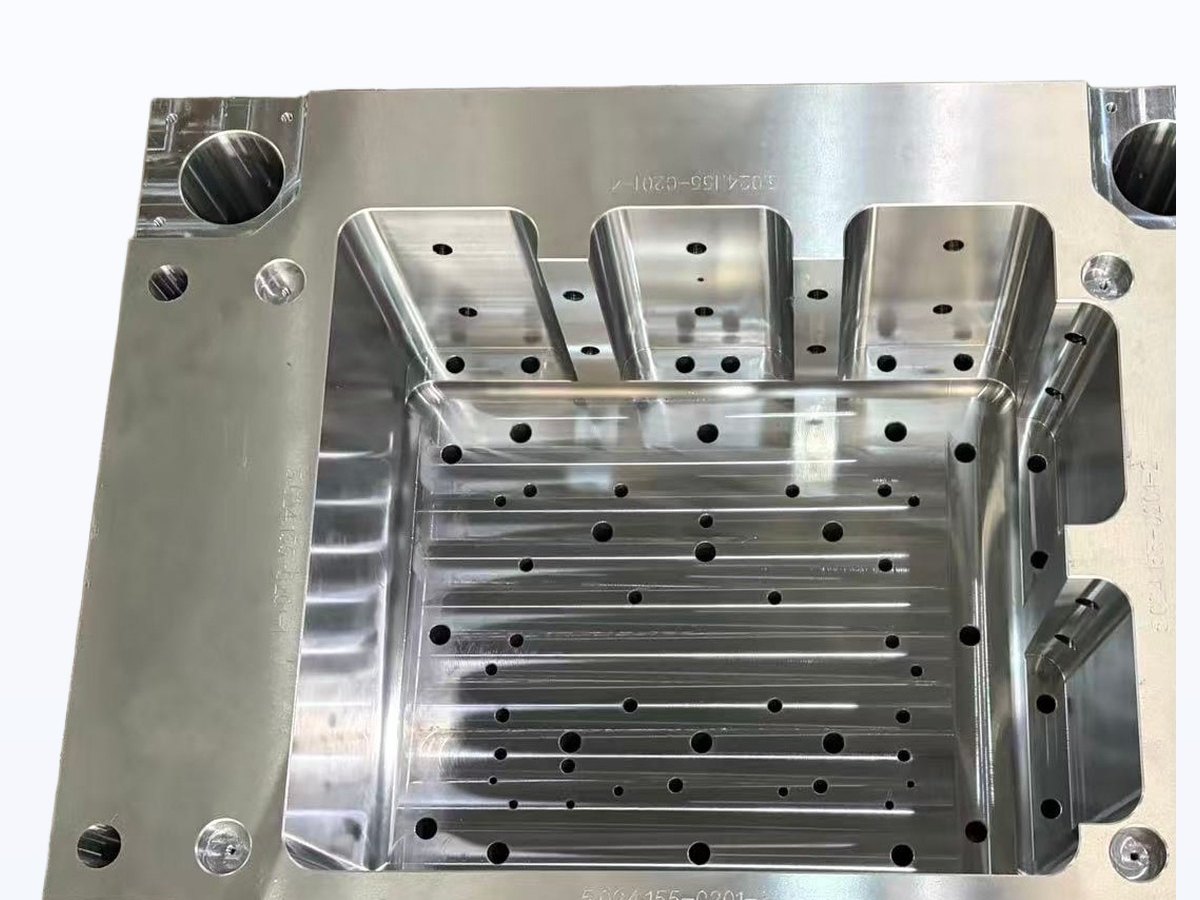
A mold base is rarely ordered by the person who will assemble it. Most of the frames that leave our floor were bought by the owner of the tool — a molder, a product company, a purchasing office — while the tool itself is being built by a toolmaker somewhere else, often in another country. The plate list that decides what we cut came from a third place again: whoever designed the tool. Three parties, one drawing, and no rule written down anywhere that says who checked what.
The plate list is the only document that decides what gets cut. Not the product model, not the 2D drawing of the plastic part, not the assembly view in the tool design. Thicknesses, pocket envelopes, guide-pillar positions, the ejector pattern, the water lines that cross a plate: all of it arrives on that list, or it does not arrive at all. An enquiry that carries a product model and a price expectation, with no plate list behind it, cannot be quoted properly. The useful first question is not about cost; it is about who holds that document.
The toolmaker owns the numbers the pockets have to fit. Cavity and core inserts are cut to the tool design, and the pockets are cut to the inserts, or to an envelope agreed for them. If the plate list was issued before the inserts were detailed, the pockets are an estimate wearing a dimension's clothes. This is the interface failure we meet most often: the insert design moves after the list has gone out, the change is recorded inside the toolmaker's own file, and no revision ever reaches the base.
We cut what the list says, and we cannot see the tool. What we can do is read the list the way a machinist reads it — a pocket wall thin enough to spring under clamping, an ejector hole pattern that lands on a rib, a lifter with no clearance behind it, a water line that breaks into a screw hole. Those flags are worth having. They are a check, not a design review, and they are only as good as what the drawing shows.
One approver, with a revision letter. When the brand's engineer and the toolmaker's engineer both mark up the same drawing, we receive two sets of redlines and no reliable way to tell which is later. Sometimes both are right and they still disagree. Nominate one person to consolidate the comments, return a single drawing with a revision letter and a date, and make that the only version we are allowed to cut. Everything downstream — the program, the inspection record, the label on the crate — keys off that letter.
Where the crate goes is part of the drawing. A base almost always ships to the toolmaker's bench rather than to the buyer's office, because that is where the inserts are. The packing list, the dimensional inspection record and the mill certificates travel inside the case, and they have to name the same consignee as the commercial invoice. A crate addressed to one company against an invoice issued to another is not a clerical detail; it surfaces at the port, at the worst possible moment.
Two correct numbers can still disagree. Our inspection record lists the features measured against the datum on the plate list. If the toolmaker measures a pocket depth from the far face and we measured from the near one, both parties will be right and the part will be blamed. Put the datum on the list. It costs one line and saves a week of photographs.
The fit is what falls between the parties. Guide pillars and bushes, the pocket-to-insert fit, the ejector plate against the ejector pattern: each sits half in the base and half in the tool, and each is somebody's job only if the order says so. Decide it in writing — dry-assembled and checked with marking blue on our floor before crating, or fitted by the toolmaker who has the inserts in hand. Both work. Neither works as an assumption.
Two payers is normal; decide it early. Terms do not change because the invoice is split: 50% with the order and 50% before shipment, and no credit terms on a first order. What changes is who receives the invoice and who releases the balance, because the balance is what releases the crate. When the brand pays the deposit and the toolmaker pays the balance, say so at order stage rather than in the week the base is finished.
Sourcing the frame from China adds distance, not another party. The plate list then crosses a language and a time zone, and the person who can answer a question about a pocket sits nine hours away from the person who asked it. Ask for the list as a dimensioned PDF plus a STEP file, have the toolmaker rather than the purchasing office confirm the pockets, and put the delivery address on the order instead of in an email thread. The document is the same one a Chinese mold base supplier reads anywhere; what changes is that nobody can walk over to your toolmaker's bench to settle it. What buying a mold base from China actually involves is mostly this: making sure the numbers that reach the machine are the ones the toolmaker signed.
What to send, in one message. The plate list with its revision letter. The insert envelopes, or the STEP model they came from. Press data if the closed height is fixed. The consignee, the delivery address and the party paying the balance. And the datum note. Five items, and an order that used to take three rounds of questions goes out on the first drawing.
The sequence on our floor does not change with the number of parties: measure, face, square, rough, check flat, finish, grind, inspect, and the record travels with the crate. Most bases leave in 7–10 days from order confirmation, on a floor in Dongguan, China that turns out more than 2,000 sets and pieces a month, with no middleman between the drawing and the machine that cuts it. What the drawing needs is one owner. Send it with a signature on it and we will confirm the stock and the interfaces before a plate is touched.
Related