
Buying · 6 min read
Frozen and open: settling a mold base before the design is finished
A base can be cut long before the cavity layout is final. What decides whether that saves a week or costs a pair of plates is whether the drawing says which numbers are settled and which are still moving.
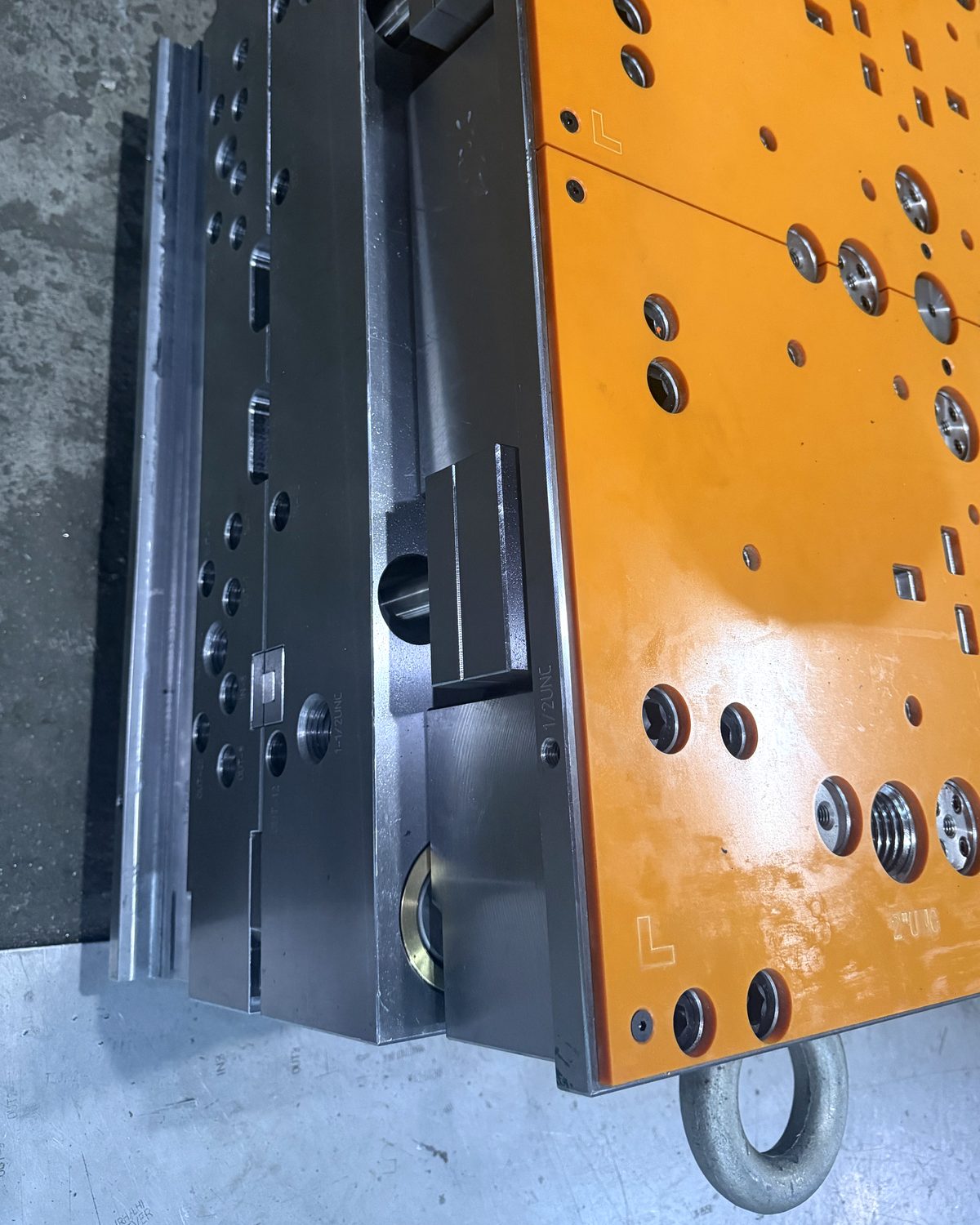
A mold base is usually the first thing a tooling project needs and the last thing the design is ready to describe. The part print exists, the press is chosen, the tooling date is fixed — and the cavity layout is still moving. Buyers answer that gap in one of two ways: wait for a finished drawing, or send what exists and let the supplier work out the rest. Both cost money, and neither is necessary.
The base depends on the envelope, not on the part. Plate sizes and thicknesses, the steel grade, the guide system and where its bores sit, the clamp plate, the lifting points, the shut height: none of those need to know where the cavities are. They follow from the size of the mold, the machine it goes into, and how many plates the design carries. That is why a base can be priced and cut while the cavity work is still being settled — and why waiting for a complete drawing often means waiting for work that was never on the critical path.
Four things that cannot be settled early. Pocket positions and depths, the ejector pattern, the water routing, and anything a slide or lifter needs come from the part and from the design, not from the envelope. Guessing them is not optimism; it is a commitment. A pocket deeper than the plate allowance means a new plate, or a spacer under a base that has already been ground — and the shut height, the ejector travel and the crate all move with it.
Thickness is the trap. Of all the early numbers, plate thickness looks harmless and is the least forgiving. It is set by the deepest cut the plate has to carry, plus the floor that has to be left under it. If the pocket depth is still open, the thickness is open too — unless the drawing says so in words: “thickness includes allowance for pocket depth, to be confirmed”. An allowance that is written down is a decision. An allowance that is assumed is a liability, and it lands on the buyer’s side of the table.
Release one: wait. The drawing arrives complete, the price is firm, the plates are cut, and the calendar has moved by however long the design took. On a relaxed project that is a fine trade. On a project with a fixed tooling date it is the whole problem, because the base was the one item in the order that did not have to wait.
Release two: send the envelope and mark what is open. One order, with an honest map of what is still moving. The supplier buys steel, cuts the plates, bores the guide holes and grinds the faces; the pockets and the ejection pattern arrive later, when the design lands. Those operations do not depend on each other, provided the envelope was right and the thickness carried the allowance the machining will need.
What it costs to skip the map. Three failures, and all three are common: plates cut to a thickness that cannot carry the pocket; guide holes bored for a system the design then changes; a base that arrives complete except for the one feature the tooling date depended on. None of them is a machining error. Each is a drawing that did not say what was already settled.
Put the map where it is read. Not in an email. On the drawing, in the title block, in the place a machinist looks first. Frozen: plate envelope, grade, guide system, clamp and shut height, lifting points. Open: pockets, ejection, water, side actions, insert fits — with a date for the next revision. A drawing marked only “preliminary” tells the shop nothing about which figures to trust. A drawing that says which lines are open lets the shop plan around them.
What an open line does to a price. A frozen line can be priced. An open line can only be carried as an allowance: a number with a range, and a note on what would move it. When two quotes come back against a half-finished drawing, check whether each one names its allowances. The lower figure may simply be assuming a smaller pocket, a thinner plate or no water at all — which is not a cheaper base, it is a quote for a different one.
Your supplier would rather have the whole drawing, and it is worth knowing why. One setup decision, one delivery, no second fixture, and no argument later about what “confirmed” was supposed to mean. Sending an envelope is safe only when the envelope is described. The distance between a base cut to your intention and a base cut to somebody’s assumption is usually one paragraph on the drawing; recovering from the second one is not priced in either quote. (A change after release is a different problem — that is a revision, with its own rules.)
Three questions before any envelope is released. Which machine does the base go into, and what does it constrain — platen size, T-slot spacing, daylight, ejector rod? What is the deepest cut the plate has to carry, and what allowance sits on top of it? Which guide system, and are the bores positioned from the mold centre or from a datum on the plate? Answer those three and the envelope is a fact. Leave them and it is a guess with a purchase order number on it.
What to send with a partial release. The drawing, with the open lines marked rather than implied. The plate list with thicknesses and the allowance stated in words. The machine data. The date the design is expected and the date the base is needed — both, because they are two different conversations with two different answers. And the item list, so the crate and the drawing describe the same set of parts.
We cut the plates, the bores, the pockets and the threads on one floor, mark the stack and inspect it before it is packed; most bases leave in 7–10 days from order confirmation, on a floor that turns out more than 2,000 sets and pieces a month, with no middleman between your drawing and the machine that cuts it. Whether the job is a base machined to your own plate list or a standard size, send the drawing with the open lines marked and we will say which of them we can start on — before the plate is cut, not after.
Related